// BarryBlog //

A creative dumping ground for issues that interest me personally and professionally, with the thought they may interest you too. Issues such as the business of design, the design of business, the design of objects, design strategy, creative direction, innovation, creativity, thought leadership, observations, as well as recommendations, mid-century modern decorative arts and architecture, and the state of my thinking (and currently the state of my heart).

Thursday, December 14, 2006

Confidence or Enthusiasm: Pick One

Those who know me well may be surprised to hear me admit that deep down I'm not particularly confident. Admittedly I fake it rather well. But between me, myself, and I (and now you), confidence has never come naturally. To the contrary, and to make up for this deficit, I've spent a career planning, paying attention, and practicing in order to be a strong performer. Therefore I believe it's safe to say that being a good performer isn't necessarily indicative of confidence in oneself.

Having said that, my desire to perform well and serve others and the passion and fitness associated with that, compared to my lack of confidence of late, has really been troubling. Deeply. Having internalized this much of late, I can't tell you how grateful I was to get a new perspective on just what it is that's been digging at me of late. In this article, by a smart person who I admire, and whose blog I subscribe to via his RSS feed, he shares five reasons why enthusiasm is better than confidence. To me, this is a refreshing bit of encouragement—news to my ears if you will, as it helps me to consider how enthusiasm and passion, two things which do come naturally to me, may in fact be related to my desire to do great work and produce value for my employer.

Boiled down to it's essence, confidence is always about yourself. Your position and concerns. Enthusiasm on the other hand, is about the work you’re presenting, the information you want to share, the message you’re trying to get across, etc. Not about your own position, rather the concern for others; your desire to share and learn and teach.And ultimately as an creative leader, to do great work that adds value.
I can't say with certainty this will resonate with you in the way it has for me, but I find Mark McGuinness's perspective innovative, refreshing, and a huge encouragement which couldn't have come at a better time. Read the entire article here.

( via wishfulthinking )

Play with Splatter


I know, I know, this is a fairly weak post. But check this out and see if you don't end up blowing 5 minutes of your life as I did.

( via Stamen.com )

Wednesday, December 13, 2006

Interview: Frog Design's Luke Williams


powered by ODEO

Creative Expert interviews Frog Design's Associate Creative Director Luke Williams, who heads the New York studio's Industrial Design practice. Click the tiny pink arrow in the above audio file or go to this Podcast. For more on Frog, I have posted on them here, here and here in the past.

If you've never spent time on Creative Expert, do so. It's a treasure trove of great material and interviews about all things design.

Monday, December 11, 2006

Harness the Power of Search


You use Google all the time. But it's way more capable than you're aware. Take this for example. Say you want to search BarryBlog for any post I've ever created containing the word "design." Well, in the "Search Google" area in your browser, just add the term "site:" then the domain name you want to search, and then the word you want to find, e.g., "site:studiosmith.blogspot.com design" – which in this particular search yields about about 46 results. Try other searches, like "site:.com thought leadership" or "site:.edu design" – etc. Very cool. For more ways to fine tune your Google search skills, check out this link.

( via Dynamist )

Illustrator Alexei Vella


Freelance Illustrator Alexei Vella has a really cool style. Here's his website.

( via MeatHaus )

Friday, December 08, 2006

Best Innovation and Design Books 2006


Business Week Online – Innovation & Design Strategy, creativity & research
Best Innovation and Design Books for 2006

( via unbeige )

Wednesday, December 06, 2006

Biz-as-Usual and Biz-by-Design: Tough Love


Another great Fast Company article—this time by Roger Martin, dean of the Rotman B-school, on the three keys to making business and design work place well. Because business wants to love design, but it's often an awkward romance.

1. Reckoning the Future: Prove It or Invent It?
2. The World of Work: Permanent Tasks or Temporary Projects?

3. Source of Status: A Large Staff or an Outsize Success?


Managing the yin and yang of business-as-usual and business-by-design means striking a balance between any number of countervailing impulses: Give people the freedom to follow their nose, but hold them accountable for their performance. Set a high bar, but recognize that failure is an unavoidable consequence of pushing into new territory. Do everything possible not just to thrill your customers but also to wring costs and efficiencies out of vendors and suppliers. The biggest challenge for all of us, designers and business people alike, is to become equally adept at quantifying the now and intuiting what's next. There's simply no other way to win.

( Read MORE )

Thoughts on Design

“Tell me what and I'll show you how." —Barry A. Smith, Recently

“Design is so critical it should be on the agenda of every meeting in every single department.” —Tom Peters, 2003

“I simply believe that design, per se, is the principal reason for emotional attachment (or detachment!) relative to a product or service or experience or brand proposition. Design, as I see it, is arguably the number one determinant of whether a product-service-experience brand proposition stands out ... or doesn’t; has integrity... or doesn’t; connects ... or doesn’t. Furthermore, it’s ‘one of those things’ that few companies put – consistently – on the front burner.”
—Tom Peters, 2004

“Design is not just what it looks like and feels like. Design is how it works.” —Steve Jobs, 2003

“Design is hugely underrated as a strategic tool. Design is the essence of emotional attachment to a product or service or experience... and therefore the wellspring of the corporate culture (or ‘soul’) and of the brand proposition itself.”
—Tom Peters, 2004

“Beauty and brains, pleasure and usability — they should go hand in hand.” —Donald Norman, 2003

“The perfection of art is to conceal art.” —Quintilian, 95

“We require from buildings two kinds of goodness: first, the doing their practical duty well: then that they be graceful and pleasing in doing it.” —John Ruskin, 1880

“Design is a plan for arranging elements in such a way as best to accomplish a particular purpose” —Charles Eames

“To design is to communicate clearly by whatever means you can control or master” —Milton Glaser

“Design is directed toward human beings. To design is to solve human problems by identifying them and executing the best solution.” —Ivan Chermayeff

“Design is the art of gradually applying constraints until only one solution remains.” —Unknown

“The greatest challenge to any thinker is stating the problem in a way that will allow a solution.”
—Bertrand Russell

“Interactive design [is] a seamless blend of graphic arts, technology, and psychology.” —Brad Wieners, 2002

“[Leonardo Da Vinci] combined art and science and aesthetics and engineering, that kind of unity is needed once again.” —Ben Shneiderman, 2002

“True interactivity is not about clicking on icons or downloading files, it’s about encouraging communication.” —Ed Scholssberg, 2002

“To dismiss front-end design as mere ‘icing’ is to jeopardize the success of any site.” —Curt Cloninger, 2001

“Good designers can create normalcy out of chaos; they can clearly communicate ideas through the organizing and manipulating of words and pictures.” —Jeffery Veen, 2000

“The ability to simplify means to eliminate the unnecessary so that the necessary may speak.” —Hans Hofmann

“Visual appearance is one of the most effective variables for quickly differentiating one application from another.” —Bob Baxley, 2003

“I’ve been amazed at how often those outside the discipline of design assume that what designers do is decoration. Good design is problem solving.” —Jeffery Veen, 2000

“Like all forms of design, visual design is about problem solving, not about personal preference or unsupported opinion.” —Bob Baxley, 2003

“Making the simple complicated is commonplace; making the complicated simple, awesomely simple, that's creativity.” —Charles Mingus

“The architect should strive continually to simplify; the ensemble of the rooms should then be carefully considered that comfort and utility may go hand in hand with beauty.” —Frank Lloyd Wright, 1908

“The design of good houses requires an understanding of both the construction materials and the behavior of real humans.” —Peter Morville, 2002

“Form follows function-that has been misunderstood. Form and function should be one, joined in a spiritual union.” —Frank Lloyd Wright

“The details are not the details. They make the design.” —Charles Eames

“Questions about whether design is necessary or affordable are quite beside the point: design is inevitable. The alternative to good design is bad design, not no design at all.” —Douglas Martin, 1989

“Science arose from poetry… when times change the two can meet again on a higher level as friends.” —Johann Goethe

“…effective communication is a key factor in the success of your product.” —Jesse James Garrett, 2002

“Problems with visual design can turn users off so quickly that they never discover all the smart choices you made with navigation or interaction design.” —Jesse James Garrett, 2002

“Good design is the most important way to differentiate ourselves from our competitors.” —Samsung CEO Yun Jong Yong, 2004

“Design is the easiest way to reenergize a product.” —Fast Company, 2005

“Where you innovate, how you innovate, and what you innovate are design problems.” —Tim Brown, 2005

“Your products run for election every day and good design is critical to winning the campaign.” —Procter & Gamble CEO A.G. Lafley, 2005

“Design's fundamental role is problem solver” —Fast Company, 2005

“When people talk about innovation in this decade, they really mean design” —Bruce Nussbaum, 2005

“Design is the fundamental soul of a human-made creation that ends up expressing itself in successive outer layers of the product or service.” —Steve Jobs, 2005

“Innovation distinguishes between a leader and a follower.” —Steve Jobs, 2005

“You can't just ask customers what they want and then try to give that to them. By the time you get it built, they'll want something new.” —Steve Jobs, 2005

“I prefer design by experts - by people who know what they are doing” —Don Norman, 2005

“The commonality between science and art is in trying to see profoundly - to develop strategies of seeing and showing.” —Edward Tufte, 2005

“Design can be art. Design can be aesthetics. Design is so simple, that's why it is so complicated.” —Paul Rand, 1997

“Simplicity is not the goal. It is the by-product of a good idea and modest expectations.” —Paul Rand, 1997

“Simple design, intense content.” —Edward Tufte, 2004

“A designer knows he has achieved perfection not when there is nothing left to add, but when there is nothing left to take away.” —Antoine De Saint-Exupery

“Truly elegant design incorporates top-notch functionality into a simple, uncluttered form.” —David Lewis, 2006

“When you take technology and mix it with art, you always come up with something innovative.” —Robert Rodriguez, 2006

“An enterprise's most vital assets lie in its design and other creative capabilities.” —Samsung chairman Kun-Hee Lee, 2006

“Business success is always defined by the quality of the overall customer experience.” —Forrester Research, 2001

“Websites that are hard to use frustrate customers, forfeit revenue and erode brands.” —Forrester Research, 1998

“It's all about one thing: creative problem-solving to get the story out.” —Robert Greenberg, R/GA, 2006

“The challenge is about taking things that are infinitely complex and making them simpler and more understandable.” —Robert Greenberg, R/GA, 2006

“The product is the brand. You build brand in our industry through the product and the experience.” —Jim Wicks, Motorola, 2006

“Design is always about synthesis -synthesis of market needs, technology trends, and business needs.” —Jim Wicks, Motorola, 2006

“It's really hard to design products by focus groups. A lot of times, people don't know what they want until you show it to them.” —Steve Jobs, 1998

( via lukew )

Tuesday, December 05, 2006

Creative Commons: Some Rights Reserved


I've been a proponent of
Creative Commons (CC) since
it's onset in 2001. Since that time, the subject of free, royalty free, right managed and licensing of photography (and other assets) in general continues to come up in discussions with my circle of clients, colleagues and collaborators. After all, most everyone knows what "All Rights Reserved" means. But what about "Some Rights Reserved?" Do you know what that means?

In short, a Creative Commons license is based on copyright, and applies to all works protected by standard copyright law—such as books, websites, blogs, photographs, films, videos, songs, etc.. A CC license allows you to determine how others exercise your copyright rights—like the right to copy your work, make derivative works or adaptations, and to distribute and to money from your work. So if Daniel has a copy of your CC-licensed work, he can share a copy with Winder–then Winder will be authorized to use it too, so long as it's consistent with the CC license you have attached to it, for which there are several choices of license you can assign. You then have a license agreement separately with both of them. The CC licenses are provided in three different formats: Commons Deed (human-readable); Legal Code (lawyer-readable); and the metadata (machine readable). Another great thing about a CC license is that they are all non-exclusive—meaning you can allow the public at large to use your work under a CC license, while entering into a separate and unique non-exclusive license with someone else, for example, in exchange for money.

As you can see, this subject isn't a quick read, and certainly requires a bit to get your brain around. But if you take away just one thing, know that Creative Commons is widly recognized and utilized. I've benefitted, as have my clients and employer, by using CC licensed images in my work, and have had over 3,500 downloads of my own images, all of which I've shared for free.

So poke around the main website, then check out these videos to learn even more. And feel free to comment. I'd love to hear your thoughts.

YotoPhoto: Search "Free-to-use" photos


Yotophoto searches for free-to-use photographs and images, indexing Creative Commons, Public Domain, GNU FDL, and various other 'copyleft' images.
While some of the images are in the Public Domain, most are released under Creative Commons, GNU FDL or similar licenses. These licenses typically have some minor conditions of use (such as requiring that credit be given to the photographer). Yotophoto offers resources and links to help users understand and comply with the license conditions (because we hate legalese as much as you do).

Free-to-use photos are not all the same, and generally do require restrictions of various sorts. I came across a great article recently which may shed more light on this. I always recommend using keen judgement when using such images, and suggest not using an image if it's not clear in writing the photo owner/distributors intent. Always read the source "Terms of Service" (TOS) or "Licensing" before downloading any such image.

( via photoshopsupport )

Monday, December 04, 2006

Space Food Sticks: You're Alive!

This no doubt gives hint to my age, but no less than a half dozen times in the last couple years the subject of "Johnson Space Food Sticks" has come up in conversation—by me, that is. Seems no one remembers these delicious morsels of goodness. So much so that I was beginning to wonder if they were just a self fabricated memory. But I do understand why I've received so many blank stares when I consider a majority of my colleagues were born after 1973—the year Space Food Sticks were introduced.

Space Food Sticks (later called "Food Sticks" after the energy crisis of the mid-1970s when the space program took a back seat politically) were REALLY popular with my schoolmates, and it always seemed like we were as cool as the astronauts when we peeled back the thin wax foil and bit into "a piece of the future." For reference, the term "energy snack" was not yet invented. Anyway, you'll notice I refer to them as "Johnson" Space Food Sticks. I do believe they were cobranded with Johnson Space Center (NASA), but nothing I have found online indicates this.


And if reconnecting with this cool product from the past isn't already enough...get this: they are now available online!! So without further ado, like a lost friend from 30 years past, I bring you...Space Food Sticks!


( special thanks to Eric Lefcowitz at RetroFuture )

Friday, December 01, 2006

BarryBlog Automatically Sent To Your Email


I've just updated BarryBlog, and as a result, you can now have BarryBlog sent directly to your email!
Just enter your address and click the subscribe link (which is located about 3-4 inches below my face, right next to where you're reading now). Once subscribed, you are notified whenever a new post is made to BarryBlog. Couldn't be easier than that. Please subscribe so that my stats will show people are actually reading this once in awhile. For advanced users using an RSS reader (such as the one I posted previously, NewsFire), you can click the "Subscribe in a reader" link, then copy and paste the URL into your reader. My feed is set to "auto-discovery." If you have questions about RSS, let me know.

Please take advantage of this new service. It took me a ton of time to figure out how to pull all the switches and turn all the dials to make this possible, so show your love. Plus I'm getting tired of sending out manual emails.

Hugs and kisses from the "staff" at BarryBlog.

I, Ugh...Had to Blog This!


( via swissmiss )

Wednesday, November 29, 2006

Pagebull: Visual Search Engine


Like Google and Yahoo, Pagebull is another internet search engine. But what makes Pagebull special are the results, which are presented visually in the form of web screenshots. Using Pagebull, you can see your results visually before visiting each resulting link, which is a time saver. Visual search results may in fact open up doors creatively based on the ability to explore more than if you just got text results. Though similar to an RSS syndicator in that sense, Pagebull is accessible on any computer with a web browser. I use (and love) a paid program called NewsFire to do almost the same thing, but it's a third party application which is only accessible on my machine in one location. There's something cool about being able to preview your search results on the fly and before commiting to a click. I wish the crew at Pagebull well.

NOTICE TO PAGEBULL STAFF: If you eventually sell for $1.4 billion to Google, please remember I blogged you when you were a nobody, so throw me a bone!

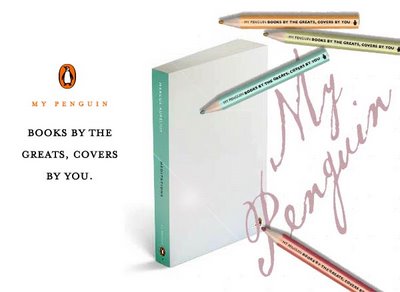
Penguin Innovation: Books by the Greats, Covers by You


According to consumer research on what factors matter most when deciding whether or not to pick up a book in a bookshop, people claim cover design is most important.

Despite these findings, publisher Penguin Books has decided to publish six top classics with blank covers under the name “My Penguin.” Each cover is made of art-quality paper that receives ink, paint, pencil and glue, and each comes shrink-wrapped to keep the cover from getting dirty. In conjunction with this effort, Penguin has launched a companion gallery website that encourages end users to submit their artwork for all to see.

Tuesday, November 28, 2006

10 Faces of Innovation


In an exclusive excerpt, we’re introduced to the 10 personality types required to keep creativity thriving in an organization--and the devil’s advocate at bay.
Ideo’s Tom Kelley describes how in an environment of design innovation, the devil’s advocate may never go away, but on a good day, these 10 personas can keep him in his place...or tell him to go to hell.

An insightful article by an insightful man regarding how to deal with certain people in an organization more proned to subtracting than adding. I Highly recommend the book.

“...this book delivers some tasty morsels to managers hungry to boost their companies' level of innovation. It is funny, insightful, and chock-full of surprising examples. If you take it on a flight from Los Angeles, you will have something to use at work by the time you land in New York.”—Bruce Nussbaum, BusinessWeek
( via fastcompany )

Thursday, November 23, 2006

Happy Thanksgiving


“O God, when I have food, help me to remember the hungry; When I have work, help me to remember the jobless; When I have a home, help me to remember those who have no home at all; When I am without pain, help me to remember those who suffer, And remembering, help me to destroy my complacency; bestir my compassion, and be concerned enough to help; By word and deed, those who cry out for what we take for granted. Amen.”
— Samuel F. Pugh

Wednesday, November 22, 2006

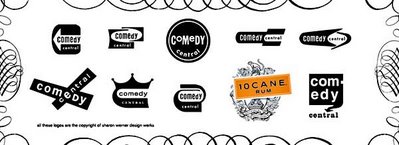
REPOST // Werner's Wonderful Werk


Originally posted September 14: Back in WWII (actually, it was the late 80's), when I was a young designer, I followed the work of the Duffy Design Group. They produced outstanding design, but always struck me as weird that an annual report for a healthcare company could look exactly the same as one for a financial institution. Since that time I've tried very hard not to limit my design solutions to a specific "style."

Well, 20 years have passed, and the rest is history. Duffy & Partners are a mega successful, legendary design powerhouse, and well, I'm not.

I digress.
A designer who cut her teeth at Duffy has gone on to a long and celebrated career, and is now considered amongst the best in the biz. Many of you reading this are well aware of her high profile work, but for those of you who aren't, her name is Sharon Werner. Her site, WernerDesignWerks, is testomony to a wonderful, enviable design career full of top notch work. I really admire her thinking. And her approach. And her client list. You will too.

Tuesday, November 21, 2006

Information Age to Recommendation Age


An interesting article by Frog Design's Strategy Director Adam Richardson who believes we’ve transitioned from the Information Age to the Recommendation Age.
Previously the challenge was obtaining information. Today, with way more information than one knows to do with, recommendations have become the currency. The key to recommendation is trustworthiness. Track record, perceived objectivity and competence of the source are paramount. Go to article.

Michael Bierut - 3 Part Interview

Adaptive Path has interviewed graphic designer and Pentagram partner Michael Beirut in 3 installments. Like everything Adaptive Path does, this interview is outstanding. Every time I read anything about Michael Bierut, I learn a ton. If you want to read a great interview of one of the best design thinkers living, check these out.
No. 1 No. 2 No. 3

( via Adaptive Path
blog )

Newer Posts Older Posts